Networking
VoIP QoS: latency, jitter, packet loss, and capacity
Voice quality depends on the complete media path. The most useful measurements are one-way delay, variation in packet arrival time (jitter), packet loss, reordering, and queueing during busy periods.
What each symptom sounds like
| Network condition | Typical experience |
|---|---|
| Packet loss | Missing syllables, clicks, robotic speech |
| High jitter | Gaps, uneven speech, late packets discarded by the jitter buffer |
| High delay | People talk over each other; echoes feel more disruptive |
| Congestion | Quality degrades during backups, uploads, or peak usage |
| Reordering | Bursts of distortion or concealment |
Capacity planning
Do not size a voice link using codec payload rate alone. Estimate concurrent calls, packetization, IP/UDP/RTP headers, VLAN or VPN overhead, encryption, signalling, and headroom for bursts. Measure both directions; a link can be asymmetric.
Practical controls
- Place voice and data in a deliberate network design with clear trust boundaries.
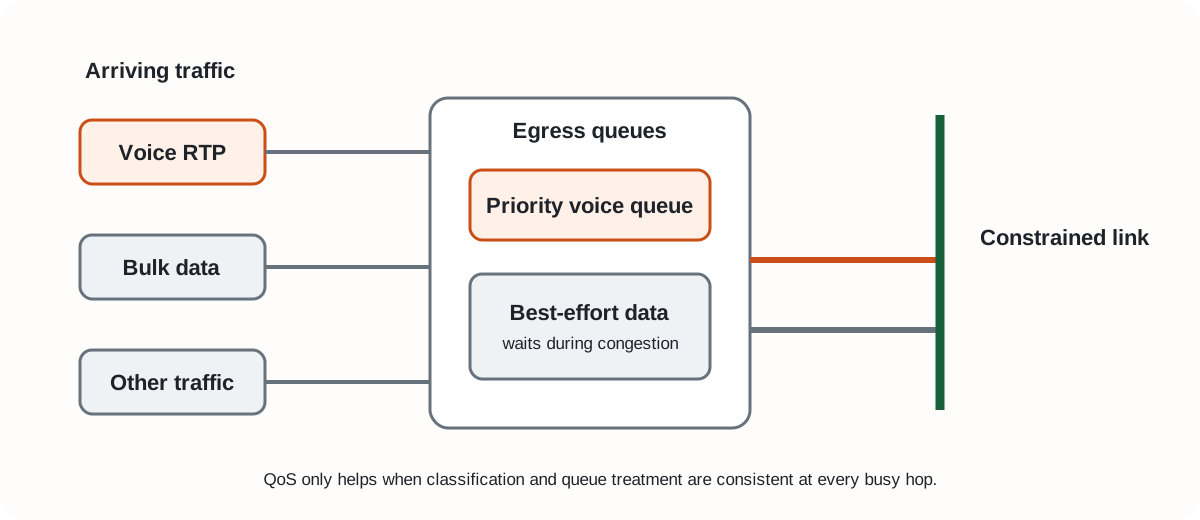
- Mark and queue voice traffic consistently, but verify markings survive each hop.
- Keep Wi-Fi coverage, channel use, roaming, and airtime contention in scope.
- Monitor during the busiest realistic period, not only during a quiet test.
- Prefer measurement from the endpoints or media edge; a clean server-to-server ping can miss the real problem.
FAQ
Is a low ping enough to prove voice quality?
No. Ping may use a different protocol, path, packet size, and queue than RTP. Test the actual media path and measure loss and variation as well as delay.
Should I always enable QoS?
QoS helps when there is contention and when the policy is designed end-to-end. Misclassified traffic or a queue that is never inspected can create confidence without improvement.
Related: voice codec guide and IP networking cheat sheet.