Networking
DNS and SRV records for VoIP
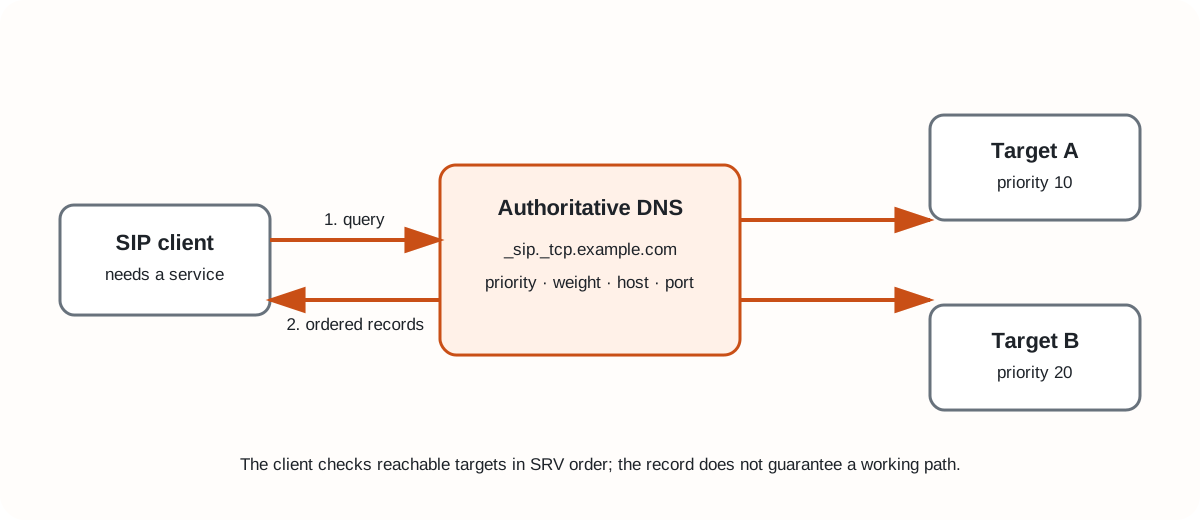
DNS can do more for VoIP than translate a hostname to an IP address. Service records can advertise which host, port, and transport should handle a service, helping with load distribution and failover.
Record types in plain language
| Record | Use |
|---|---|
| A | Maps a hostname to an IPv4 address |
| AAAA | Maps a hostname to an IPv6 address |
| SRV | Publishes service, protocol, priority, weight, host, and port |
| NAPTR | Helps select service and transport combinations in systems such as ENUM |
| TXT | Publishes text-based policy or verification data; not a substitute for SRV |
An SRV name has the form _service._transport.example.com, such as _sip._tcp.example.com or _sips._tcp.example.com. The client must support the relevant lookup and selection rules; a record alone does not guarantee failover.
Troubleshooting checklist
- Query the authoritative DNS service, not only a local cache.
- Check TTL and propagation after changes.
- Confirm the hostname and port returned by SRV are reachable.
- Check whether the client prefers IPv6 but the IPv6 path is broken.
- Verify certificates match the hostname used for TLS.
- Capture the lookup sequence if a device behaves differently from a desktop test.
Related: IP networking cheat sheet and SIP trunking.